
How to Use disjonteur 10A: Examples, Pinouts, and Specs
 Design with disjonteur 10A in Cirkit Designer
Introduction
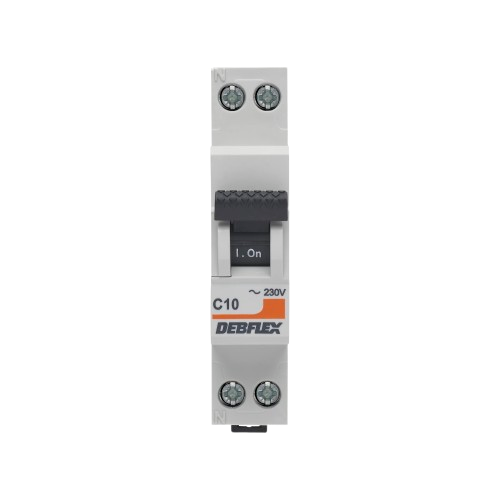
The Disjonteur 10A is a circuit breaker designed to protect electrical circuits from overloads and short circuits. It automatically interrupts the current flow when the current exceeds 10 amperes, preventing damage to connected devices and reducing the risk of electrical fires. This component is widely used in residential, commercial, and industrial electrical systems to ensure safety and reliability.
Explore Projects Built with disjonteur 10A
 Open Project in Cirkit Designer
 Open Project in Cirkit Designer
 Open Project in Cirkit Designer
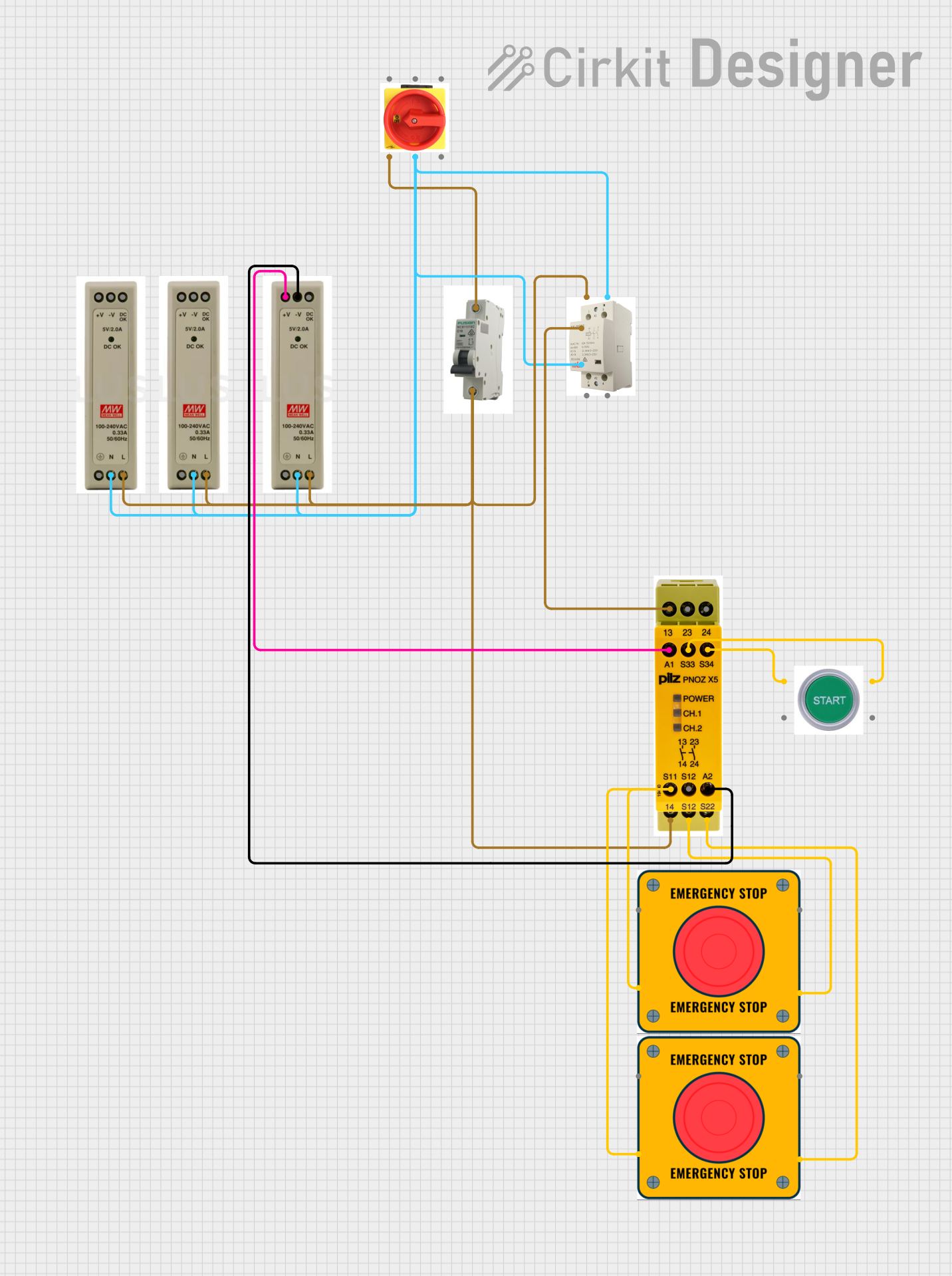 Open Project in Cirkit Designer
Explore Projects Built with disjonteur 10A
Open Project in Cirkit DesignerOpen Project in Cirkit DesignerOpen Project in Cirkit DesignerOpen Project in Cirkit DesignerCommon Applications and Use Cases
- Protection of household electrical circuits (e.g., lighting, outlets)
- Safeguarding industrial equipment and machinery
- Overload and short-circuit protection in power distribution systems
- Integration into control panels for automated systems
Technical Specifications
The following table outlines the key technical details of the Disjonteur 10A:
| Parameter | Value |
|---|---|
| Rated Current | 10A |
| Rated Voltage | 230V AC (single-phase) |
| Breaking Capacity | 6kA |
| Trip Curve | Type C (moderate inrush current tolerance) |
| Operating Temperature | -5°C to +40°C |
| Mounting Type | DIN rail |
| Number of Poles | 1P (single-pole) |
| Standards Compliance | IEC 60898-1 |
Pin Configuration and Descriptions
The Disjonteur 10A does not have traditional pins like electronic components but instead features screw terminals for wire connections. The table below describes the terminal configuration:
| Terminal | Description |
|---|---|
| Line (Input) | Connects to the incoming power supply (live wire). |
| Load (Output) | Connects to the circuit or device being protected. |
Usage Instructions
How to Use the Disjonteur 10A in a Circuit
- Mounting: Securely install the Disjonteur 10A onto a standard DIN rail in your distribution box or control panel.
- Wiring:
- Connect the live wire from the power source to the Line (Input) terminal.
- Connect the live wire leading to the load (e.g., circuit or device) to the Load (Output) terminal.
- Ensure all connections are tight and secure to prevent arcing or loose contacts.
- Testing:
- After installation, switch on the circuit breaker and verify that the connected circuit operates correctly.
- Use the test button (if available) to simulate a fault and confirm proper tripping functionality.
- Operation:
- In normal operation, the circuit breaker remains in the "ON" position.
- If an overload or short circuit occurs, the breaker will trip to the "OFF" position, interrupting the current flow.
Important Considerations and Best Practices
- Wire Sizing: Ensure that the wires connected to the circuit breaker are rated for at least 10A to prevent overheating.
- Load Compatibility: Verify that the total load current does not exceed 10A.
- Environmental Conditions: Avoid installing the breaker in areas with excessive moisture, dust, or extreme temperatures.
- Resetting: After a trip, identify and resolve the cause of the fault before resetting the breaker to the "ON" position.
- Periodic Testing: Regularly test the breaker to ensure it functions correctly.
Troubleshooting and FAQs
Common Issues and Solutions
| Issue | Possible Cause | Solution |
|---|---|---|
| Breaker trips frequently | Overload or short circuit in the circuit | Reduce the load or fix the short circuit. |
| Breaker does not trip during a fault | Faulty breaker or incorrect installation | Replace the breaker or check wiring. |
| Breaker cannot be reset to "ON" position | Persistent fault in the circuit | Inspect and resolve the fault condition. |
| Loose connections causing arcing or heating | Improperly tightened terminal screws | Tighten all connections securely. |
FAQs
Can I use the Disjonteur 10A for DC circuits?
- No, this breaker is designed for AC circuits only. For DC applications, use a breaker specifically rated for DC.
What does the Type C trip curve mean?
- A Type C breaker tolerates moderate inrush currents (5-10 times the rated current) before tripping, making it suitable for circuits with inductive loads like motors or transformers.
How often should I test the breaker?
- It is recommended to test the breaker at least once every six months to ensure proper functionality.
Can I install the breaker horizontally?
- Yes, the Disjonteur 10A can be installed in any orientation, but vertical installation is preferred for ease of operation and maintenance.
By following this documentation, you can safely and effectively use the Disjonteur 10A to protect your electrical circuits.